


SECTION I
The Wealth of
Tax-Exempt Foundations
Take Over the Education System

“There’s a “built-in duality” in our modern world that tells us that the Bolsheviks/Marxists/Socialists are on the left end of the spectrum and the money-bankers/capitalists are on the right end; “therefore, we implicitly reason, the two groups have nothing in common and any alliance between the two is absurd.
However, “it may be observed that both the extreme right and the extreme left of the conventional political spectrum are absolutely collectivist. The national socialist (for example, the fascists) and the international socialist (for example, the communist) both recommend totalitarian politico-economic systems based on naked, unfettered political power and individual coercion. Both systems require monopoly control of society. While monopoly control of industries was once the objective of J.P. Morgan and J. D. Rockefeller, by the late nineteenth century the inner sanctums of Wall Street understood that the most efficient way to gain an unchallenged monopoly was to “go political” and make society go to work for the monopolists —under the name of the public good and the public interest. This strategy was detailed in 1906 by Frederick C. Howe in his Confessions of a Monopolist on page 89-90, “two things …if you want to get rich—that is, very rich—in this world, make society work for you. The other thing was, that this can only be done by making a business of politics … If you are big enough, make the whole world work you.”
Therefore, an alternative conceptual packaging of political ideas and politico-economic systems would be that of ranking the degree of individual freedom versus the degree of centralized political control. Under such an ordering, THE CORPORATE WELFARE STATE AND SOCIALISM ARE AT THE SAME END OF THE SPECTRUM. Hence, we see that attempts at monopoly control of society can have different labels while owning common features.” Wall Street and Bolshevik Revolution by Antony Sutton. Copy right 1974. Chapter 1, pp. 15-17.

EDUCATION
“In his column in the New York Daily News of December 21, 1954, John O’Donnell said that the Reece Committee had the “almost impossible task” of telling “the taxpayers that the incredible was, in fact, the truth.” “The incredible fact,” he continued “was that huge fortunes piled up by such industrial giants as John D. Rockefeller, Andrew Carnegie, and Henry Ford were today being used to destroy or discredit the free-enterprise system which gave them birth.”
“Unfavorable public estimate of the elder Rockefeller and Andrew Carnegie, made it inexpedient in 1905 for their newly created philanthropic foundations to attempt any direct reforms in higher education.” Reece Committee Report, p. 134
“…indirectly through general and non-controversial purposes.” “For instance,” said Dr Hollis, “there is little connection between giving a pension to a college professor or giving a sum to the general endowment of his college, and reforming entrance requirements, the financial practices, and the scholastic standards of his institution.” Yet one was tied to the other. It was a case of conform, or no grant!” Dr Ernest Victor Hollis, Chief of College Administration in the United States Office of Education.
Merely to recognize the satisfactory results of benign coercion, to point to the highly desirable academic reforms for which this coercion was responsible, is not enough. Such a mistake was made by those who lauded the internal reforms of fascism in Italy and ignored the cost in freedom and liberty. Power is in and of itself dangerous. When we make it possible for financial power to exercise substantial control over education, we endanger our welfare… Today, school policymakers anticipate the idiosyncrasies and preferences of foundation officials in a manner similarly producing conformity.

The American movement seized upon some of the teachings of John Dewey, who, as Mr. Sargent put it,
“Expounded a principle which has become destructive of traditions and has created the difficulties and the confusion, much of it, that we find today. Professor Dewey denied that there was any such thing as absolute truth, that everything was relative, everything was doubtful, that there were no basic values and nothing which was specifically true.” (When there is no truth, there are also no lies).
Mr. Sargent added that, with this philosophy,
***you automatically wipe the slate clean; you throw historical experience and background to the wind, and you begin all over again, which is just exactly what the Marxists want someone to do. Aaron Sargent is a lawyer who has had considerable experience in special investigations and research in education and subversion and was a witness before the Reese Committee.
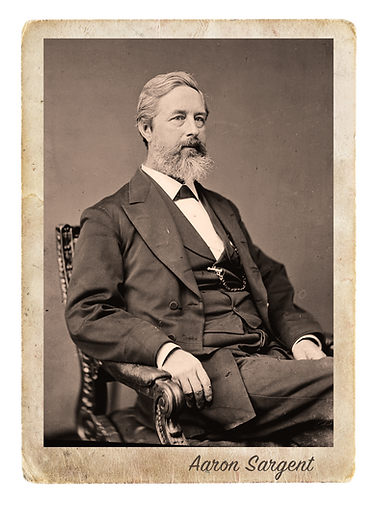


The Dewey philosophy took hold just about the time John D. Rockefeller established his first foundation, The General Education Board, in 1902.
(There will be much more on John Dewey, the father of modern progressive education, and his ‘progressive/socialist’ leanings in a later thread, but for now, here are some quotes from a lecture he gave in Chicago in 1899, three short years before Rockefeller founded the General Education Board.
“Can we connect this “New Education” with the general march of events?... the growth of a world-wide market as the object of production.”
“There is no obvious social motive for the acquirement of mere learning, there is no clear social gain in success thereat. Indeed, almost the only measure for success is a competitive one…”
“The great thing to keep in mind, then, regarding the introduction into the school of various forms of active occupation, is that through them the entire spirit of the school is renewed. It has a chance to affiliate itself with life, to become the child’s habitat, where he learns through directed living, instead of being only a place to learn lessons having an abstract and remote reference to some possible living to be done in the future. It gets a chance to be a miniature community, an embryonic society. This is the fundamental fact, and from this arises continuous and orderly streams of instruction. Under the industrial regime described, the child, after all, shared in the work, not for the sake of the sharing, but for the sake of the product.” John Dewey, The School and Society—The Child and the Curriculum. Copyright 1902. Pp. 8,9, 15, 18.
Learning subjects that give a child a foundation of truth like Greek Philosophy, Latin, and Scripture, which teach children ‘HOW’ to think and also, how to spot deceptions. Those aspects of learning were not practical in the eyes of John Dewey because they teach universal truths, which Dewey did not believe in. And notice how he routinely speaks of “world-wide markets”, “measure for success is a competitive one”, “under the industrial regime”, and “but for the sake of the product.” Every reference to education goes back to a market reference. You could use another phrase with exactly the same meaning, ‘a business reference’ and a successful business needs a plan.

DEWEY AND THE MONOPOLISTS WANTED WORKERS, NOT THINKERS.
The National Education Association became enamored early of the Dewey philosophy. It was at Columbia University, however, the institution in which Professor Dewey taught so long that perhaps the greatest strides were made in applying this philosophy to teaching. In 1916 the Department of Educational Research was established in Teachers College (part of Columbia University). This department was responsible for the creation of the The Lincoln School in 1917, which, to use the words of a Teachers College pamphlet, “kindled the fire which helped to spread progressive education.”
The same pamphlet * noted that John D. Rockefeller, through The International Education Board, donated $100,000 to establish an International Institute at Teachers College. It noted as well that a Dr. George S. Counts had been made associate Director of the Institute, and Dr. Counts became one of the leading radicals in education.
The growing radicalism which was beginning rapidly to permeate academic circles was no grass-roots movement. Mr. Sargent cited a statement by Professor Ludwig Von Mises that socialism does not spring from but is instigated by intellectuals “that form themselves into a clique and bore from within and operate that way. *** It is not a people’s movement at all. It is a capitalization on the people’s emotions and sympathies toward a point these people wish to reach.” Reece Committee Report, pp. 147-149.
Professor Harold J. Laski, philosopher of British socialism, said of the Commission’s report:
“AT BOTTOM, AND STRIPPED OF ITS CAREFULLY NEUTRAL PHRASES, THE REPORT IS AN EDUCATIONAL PROGRAM FOR A SOCIALIST AMERICA.”
(and remember it is funded by the wealthiest families on planet Earth).
…That it is not too much to expect in the near future a decided shift in emphasis from mechanics and methodology to the content and function of courses in the social studies. That is the gist of it.
This report became the basis for a definite slanting in the curriculum by selecting certain historical facts and by no longer presenting others.” Foundations: Their Power and Influence by Rene A. Wormer. Copyright 1958. Chapter 5, pp. 139-150.


The Structure
What makes up the interlock in the financing of social-science activities
The report of the Reece Committee described the “network or cartel” in the social sciences as having five components. The first is a group of foundations, composed of the various Rockefeller and Carnegie foundations, The Ford Foundation (referred to as “a late comer but already partially integrated”), the Commonwealth Foundation, The Maurice and Laura Falk Foundation, The Russell Sage Foundation, and others.
The second component consists of the “intermediaries” or “clearing houses,” such as:
The American Council of Learned Societies
The American Council on Education
The National Academy of Sciences
The National Education Association
The National Research Council
The National Science Foundation
The Social Science Research Council
The Progressive Education Association
The John Dewey Society
The Institute of Pacific Relations
The League for Industrial Democracy
The American Labor Education Service
The learned societies in the several “social sciences” were listed as the third component.
The fourth consists of the learned journals in these areas.
The fifth was “certain individuals in strategic positions, such as certain professors in the institutions which receive the preference of the combine.”


As an example of interlocking directorates, the report cited the case of the Rand Corporation. This is a corporation in the nature of a foundation, which plays a very important part in government research. It would warrant special attention in connection with any study of the extent to which foundation interlocks have influenced government.

Among the trustees and officers of The Rand Corporation were found the following who had material connections with other foundations:
This example of interlocking is especially interesting because the Chairman of this semi-governmental organization, The Rand Corporation, was, at the same time, president of The Ford Foundation, which granted it one million dollars in 1952 alone.
The following list of social-science consultants serving the Research and Development Board of the Defense Department at one time (1953) illustrates the frequency with which foundations executives are appointed as “experts” controlling the expenditure of government funds in research:


THE SOCIAL SCIENCE RESEARCH COUNCIL
“Foundations,” said the Reece Committee report, “becoming more numerous every day, may someday control our whole intellectual and cultural life—and with it the future of this country. The impact of this interlock, this intellectual cartel, has already been felt deeply in education and in the political scene.”
The report then discussed The Social Science Research Council, taking it as an example of the “association of individual foundations with one of the intermediary or executive foundations”—another form of interlock.

THE AMERICAN COUNCIL ON EDUCATION
The American Council on Education is an intermediary to which the Reece Committee also gave special attention. It is a council of national education associations, financed by membership dues, by government contracts, by heavy contributions from major foundations, and by donations of associated organizations. Among its supporters have been:
The General Education Board (Rockefeller)
The Carnegie Corporation
The Carnegie Endowment of International Peace
The Carnegie Foundation for the Advancement of Teaching
The Rockefeller Foundation
The Ford Fund for Adult Education
The Alfred P. Sloan Fund
The Payne Fund
B’nai B’rith
The Edward W. Hazen Foundation
The Grant Foundation
The Ellis L. Phillips Foundation
Foundations: Their Power and Influence by Rene A. Wormser. Pp. 63-68, 76.

Paideia (/paɪˈdeɪə/; also spelled paedeia; Greek: παιδεία)[1] referred to the rearing and education of the ideal member of the ancient Greek polis or state.
Paideia was meant to instill aristocratic virtues in the young citizen men who were trained in this way. An ideal man within the polis/state would be well-rounded, refined in intellect, morals, and physicality, so training of the body, mind, and soul was important. Both practical, subject-based schooling as well as a focus upon the socialization of individuals within the aristocratic order of the society were a part of this training.
Paideia was the foundation for young minds to learn HOW to think, not WHAT to think and it was based on a higher power which John Dewey opposed.


By capturing the education system these foundations could control what was taught, or more importantly, what was not taught. To keep their monopolistic goals advancing in the future they needed to sway the opinions of the next generation into thinking “properly” according to them, and the next generation after that, and so on and so forth. Again, this is why subjects like Greek Philosophy, Latin, and Scripture are not taught in our schools any longer. I don’t think it can be stated better than how John Perkins put in his book, The Confessions of an Economic Hitman on page 1, when he said, “The goal of domination is cloaked in a critical factor: the perception that those being dominated are receiving benefits.” It is the “benefits” of the Socialist leaders that is sold to society.
“In 1907, the “Gary Plan” for education was introduced in Gary, Indiana. In 1915, the “Progressive” publication, The New Republic editors wrote:
“…It believes that freedom and tolerance mean the development of independent powers of judgment in the young, not the freedom of older people to impose their dogmas on the young… It insists that the plasticity of the child shall not be artificially and prematurely hardened into a philosophy of life, but that experimental naturalistic aptitudes shall constitute the true education.”
In other words, parents should not be allowed to pass “their dogmas” on to their children. This “plasticity” points to the underlying power of paideia to shape how children develop a “philosophy of life”… The Progressives realized that true classical Christian education did something much more powerful than just teach virtues—it cultivated a Western Christian Paideia with a foundation in divine Truth. At its very core, the Classical Christian Education reaches for an ideal higher than human institutions. This type of paideia was a feared and powerful tool because it was anchored, not in the “progress” of human institutions, but in an unchanging, divinely inspired set of assumptions. This anchorage to the past constrained the societal change so necessary for the Marxist movement to achieve its ends. Progressives saw danger in allowing parents to influence their children’s worldview, and thus perpetuate a Christian culture in America.” Battle for the American Mind by Pete Hegseth. Copyright 2022. Pp 88,89.
The Progessives/Socialists of that era wanted to be “unburdened from what was” meaning the past had to be discarded. Essentially, anything we didn’t learn from them needed to be erased because universal truths, especially divine Truth, would get in the way of their business plan. Again, “where there are no truths there are also no lies.”
The business men wanted monopoly control over all global business. The Socialists wanted monopoly control over all humanity. They supported each other within the Military Industrial Complex. The ceremony for that marriage is outlined in section II.